
What is Pottani Chikitsa?
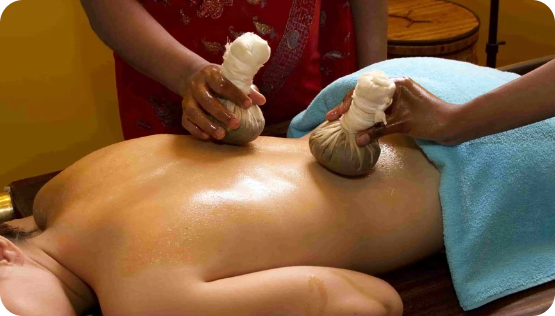
Pottani Chikitsa, also known as Herbal Poultice Massage, is a traditional external therapy widely used in Siddha and Ayurvedic medicine. In this treatment, medicated herbs are selected based on the patient’s condition and prepared into a warm bolus or poultice (pottani), which is then gently massaged or compressed over the body using specific techniques.
The bolus is typically wrapped in a cotton or muslin cloth, heated with herbal oils or decoctions, and applied to the affected areas to relieve pain, reduce inflammation, enhance circulation, and detoxify.
Traditional Perspective – Siddha & Ayurveda
In Siddha and Ayurveda, Pottani Chikitsa works by:
- Balancing aggravated doshas, especially Vata and Kapha, which are responsible for pain, stiffness, and swelling.
- Stimulating srotas (body channels) to remove stagnation and promote healthy flow of vital energy (prana).
- Penetrating heat and herbal potency into the tissues (dhatus), aiding in decongestion, nourishment, and rejuvenation.
Different types of herbal boluses are used, depending on the nature of the ailment:
- Vatahara Pottani (for joint pain, stiffness, muscle cramps)
- Pittahara Pottani (for inflammation, burning sensation)
- Shothahara Pottani (anti-swelling)
- Snigdha Pottani (with oil – for nourishing and softening tissues)
Conditions Treated
Joint pain (arthritis, osteoarthritis, rheumatoid arthritis)
- Back pain, neck and shoulder stiffness
- Muscle spasms and sports injuries
- Frozen shoulder, sciatica, and spondylosis
- Postnatal recovery and muscular weakness
- Chronic pain, fatigue, and sluggish circulation
Scientific Understanding
Modern research explains the efficacy of herbal poultice massage through several physiological mechanisms:
- Thermotherapy effect: The warmth increases blood flow, enhances oxygen delivery to tissues, and reduces muscle tension.
- Transdermal delivery: Bioactive compounds in herbs (e.g., curcumin, ricinoleic acid, gingerol) penetrate the skin to reach underlying muscles and joints.
- Lymphatic stimulation: The rhythmic compressing and tapping motion stimulates lymphatic drainage, aiding detoxification and reducing fluid retention.
- Anti-inflammatory response: Studies confirm that herbal poultices reduce the release of pro-inflammatory markers like prostaglandins and TNF-α.